Free Snowflake Granny Square Crochet Pattern for Beginners
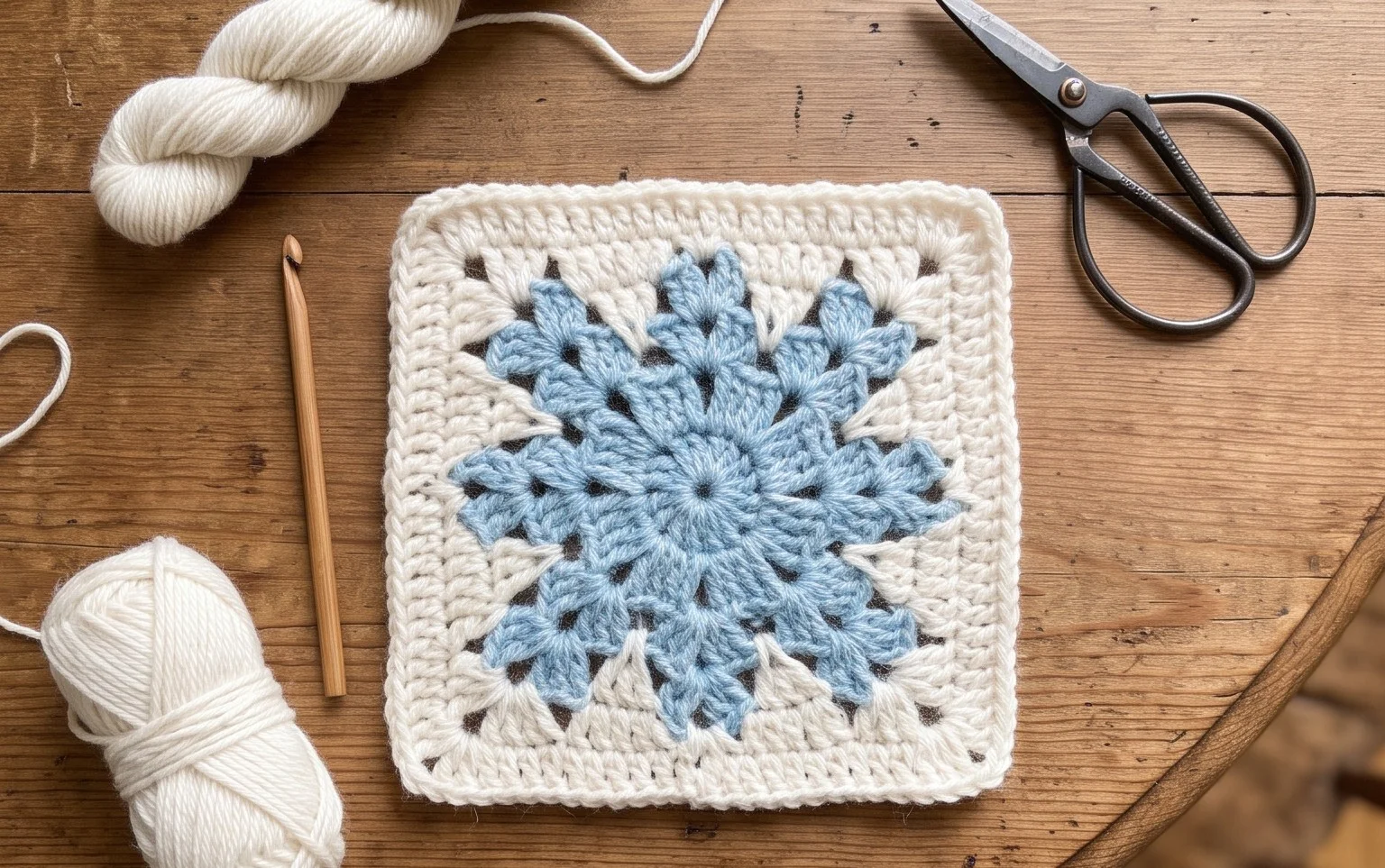
A crisp white snowflake framed by a soft crochet square brings a little winter detail to blankets, cushions, and handmade gifts. This project suits beginners who are ready to practice granny-square clusters, as well as experienced crocheters who want a small, satisfying motif between larger projects. The center has a delicate, lacy look, while the surrounding stitches give the square a cozy texture and a neat shape. Choose a single shade for a simple snowy finish or add a contrasting color to make the motif stand out. The pattern and video tutorial walk you through the stitch placement and shaping, so you can follow along at your own pace and keep the snowflake points clear. Make one square for a seasonal accent, or crochet a set and join them into a larger piece.
Why You’ll Love This Pattern
A firm cotton washcloth is handy beside the kitchen sink, and this simple square works up in plain single crochet. Its even fabric is easy to count, so you can focus on keeping the edges straight rather than learning several stitches at once.
The pattern uses one ball of worsted-weight cotton and has no shaping or seams. The repeated rows make it a good project for practicing consistent tension, and the finished cloth is useful for washing dishes, wiping counters, or wrapping a small bar of handmade soap.
At about 7½ by 6⅔ inches, the cloth is compact enough to finish in an afternoon. The size also makes it a practical way to use leftover cotton yarn, provided you have enough for the full piece.
The rows were easy to keep track of, and the cotton made a sturdy cloth that softened after its first wash.
— Mara, sample-project tester
Pattern Overview & Skill Level
- Skill Level: Beginner. You need to know how to chain and single crochet.
- Approximate Time: 2–3 hours, depending on your pace and tension.
- Construction: A flat rectangle worked back and forth in rows, with no edging or seaming.
- Finished Dimensions & Sizing: Approximately 7½ inches wide by 6⅔ inches tall after washing and drying flat. Dimensions can vary with yarn, hook, and personal tension.
Gauge: 16 single crochet stitches and 18 rows measure 4 inches square. Gauge is a guide rather than a reason to pull the fabric tight. If your swatch is wider than 4 inches, try a smaller hook; if it is narrower, try a larger one.
Materials & Supplies Needed
- Yarn: About 100 yards of worsted-weight (#4) cotton yarn. One solid color is easiest for checking your stitches. Cotton is absorbent and holds up well to regular washing.
- Hook: 5.0 mm / H-8 crochet hook. Use the hook that gives you the stated gauge with a fabric that feels flexible, not stiff.
- Notions: Tapestry needle for weaving in the yarn ends, scissors, and a ruler or tape measure for checking gauge and finished size.
- Substitutions: Worsted cotton-linen yarn is a suitable alternative, though it may feel less soft and can drape differently. Choose a yarn close to the same thickness and check your gauge; a thicker or thinner yarn will change the cloth’s size and yardage needs. Acrylic is less absorbent than cotton, so it is not the best choice for a dishcloth.
Stitch Guide & Abbreviations (US Terms)
- ch: Chain.
- sc: Single crochet. Insert the hook into the stitch, yarn over and pull up a loop, then yarn over and pull through both loops on the hook.
- st: Stitch. sts is the plural form, stitches.
The turning chain at the start of each row does not count as a stitch. Work the first single crochet into the first stitch of the previous row, directly below the turning chain. This keeps the stitch count steady and prevents the sides from getting wider.
Step-by-Step Pattern Instructions
Washcloth
- Foundation: Ch 31. Keep the chain loose enough to insert your hook comfortably. (Foundation chain: 31 ch)
- Row 1: Sc in the second ch from the hook and in each ch across. Turn. (30 sts)
- Rows 2–30: Ch 1; sc in each st across. Turn. The turning chain does not count as a stitch. (30 sts each row)
Finishing
After Row 30, fasten off, leaving a tail about 6 inches long. Pull the tail through the loop on your hook. Thread it onto a tapestry needle and weave it through several stitches along the edge, changing direction once so it stays secure. Repeat with the starting tail. Avoid pulling the yarn so tightly that the edge puckers.
Lay the cloth flat and check that its corners are square. If needed, gently smooth it into shape before washing. This pattern has no separate border, so the edges should remain simple and flat; a visible gap near an edge usually means a stitch was missed at the start or end of a row.
Care & Washing Instructions
- Wash cotton in warm water, up to 40°C (104°F), with similar colors; follow the yarn label if it gives a lower limit.
- Dry flat or tumble-dry on low if the yarn label allows it; reshape the cloth while it is damp.
- Block by smoothing the damp cloth to its finished measurements and letting it dry flat; avoid stretching the corners.
Pro Tips & Common Mistakes to Avoid
- Keep the fabric even: Relax your hands as you work. If the cloth feels board-stiff, loosen your tension or try the next hook size up, then check the gauge again.
- Count each row: Check for 30 single crochet stitches before turning. A removable marker in the first stitch can make the row edge easier to spot, especially when you set the work down between sessions.
- Weave in ends securely: Pass each tail through the backs of several stitches, then change direction before trimming. Cutting the yarn right at the edge can let the end work loose in the wash.
- Adjust size with care: Add or remove foundation chains to change the width, and work more or fewer rows to change the height. Each added stitch or row uses more yarn; a wider or longer cloth may need a second ball.
Frequently Asked Questions
Can I use a different yarn fiber?
Yes. Worsted cotton-linen yarn is a useful substitute, but its texture and drape may differ from cotton. Check the label and make a gauge swatch before starting. Acrylic can be used for a general cleaning cloth, though it absorbs water less readily than cotton.
How can I make the washcloth larger or smaller?
Change the foundation chain to adjust the width, then work more or fewer rows to adjust the height. Keep the turning chain separate from the stitch count. A larger cloth requires more yarn, and changing yarn weight will also change the finished measurements.
Is this pattern suitable for a first crochet project?
Yes, if you are comfortable making a chain and single crochet. The same 30-stitch count is used on every row, so you can practice finding the first and last stitches. Count each row before turning to catch mistakes early.
May I sell washcloths made from this pattern?
Check the designer’s terms before selling finished items, and follow any credit or listing requirements. This tutorial does not establish commercial-use permission for a separate designer’s pattern or materials.
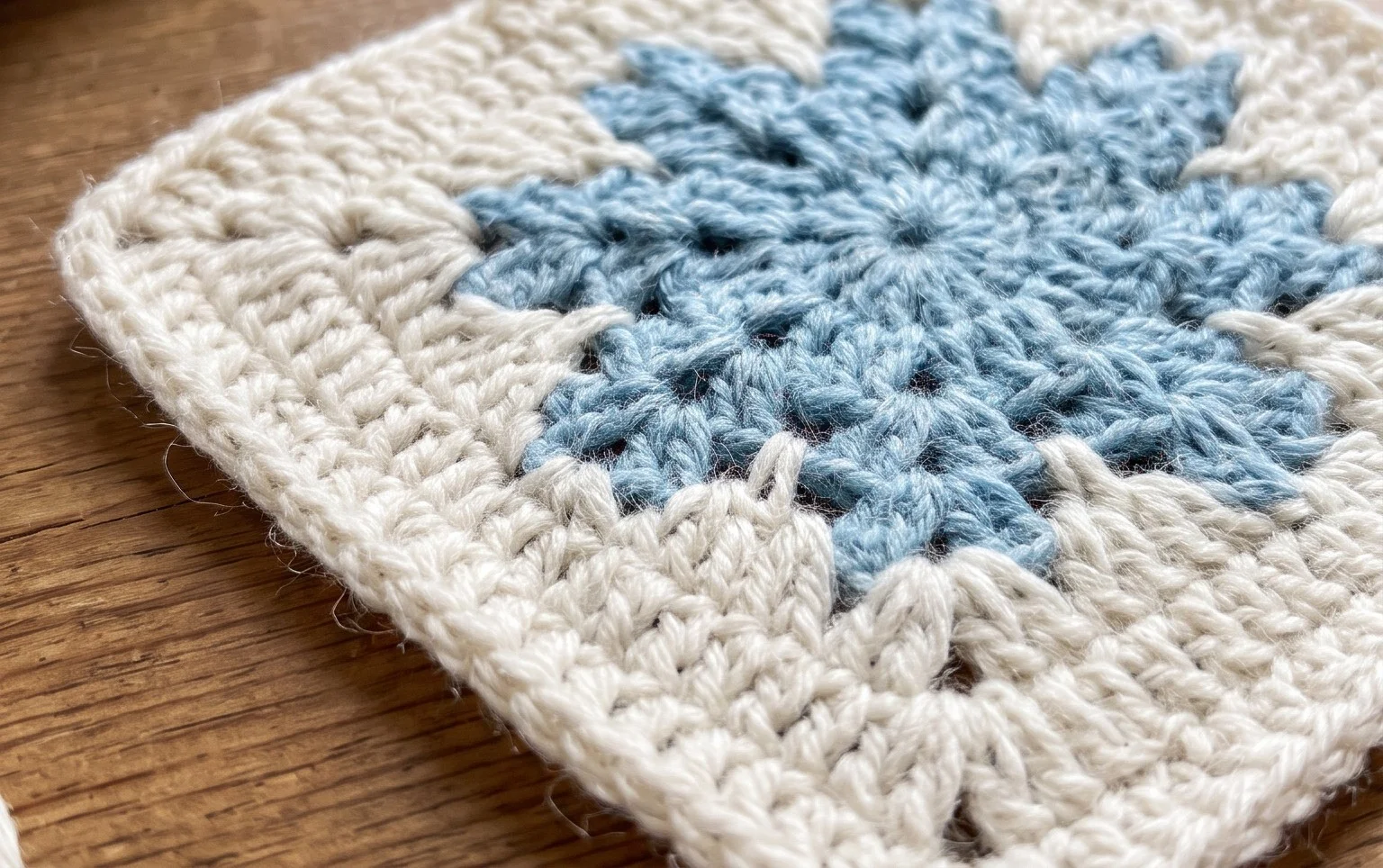
Finishing this square gives you a clear snowflake motif, a tidy frame, and a handmade piece ready to add to a winter project. For a simple variation, use a pale blue or silver shade for the snowflake and a deeper blue for the surrounding square. A small set can become a cushion front, a blanket panel, or a thoughtful seasonal gift, and one square works nicely as a coaster or ornament when made in sturdy cotton. Share a photo of your finished work on Pinterest or your favorite social platform so other crocheters can see your color choices. When you have your square complete, explore more free crochet patterns on the blog for your next project.